|
The Republic of Ecuador straddles the Equator. It is bordered by Colombia to the North and Northeast and Peru to the south and southeast.
Did you know that we are unique in the cruise and travel business. You can what our Ecuador Travel Advisors say about Ecuador here. See how we plan our renowned Ecuador vacations, cruises and tour experiences for our discriminatining clientele.
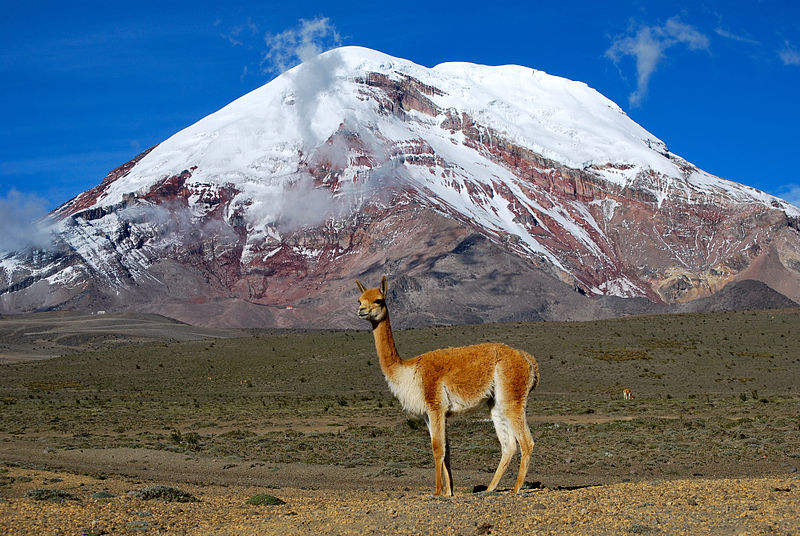
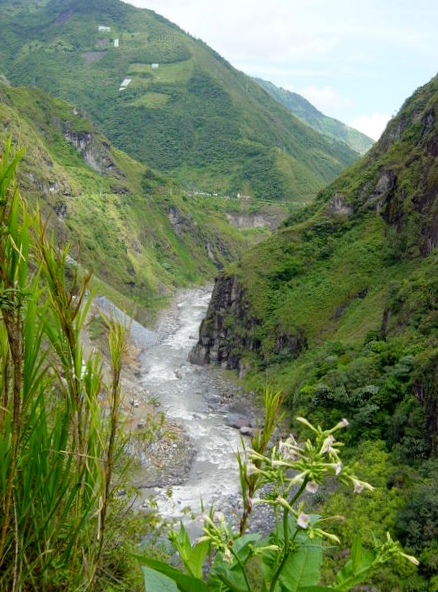
Ecuador is one of the smallest countries in South America: it is about the size of the state of Nevada. Yet despite it's small size, Ecuador is one of the most geographically varied countries in the world.
Ecuador is located on the northwestern coast of South America (is one of the smallest countries in the region: it is about the size of the state of Nevada). It comprises the continental territory between coordinates of latitude 01 27' 06' N and 05 00' 56' S and longitude 75 11' 49'W to 81 00' 40'W, that covers approximately 104,550 square miles -270,670 km2- plus the Galapagos Islands (1,000 km. off the coast of Ecuador).
FLORA: Ecuador has a vast and extremely diverse flora, despite its small size. Ecuador is one of the world's most biodiversified country in both flora and fauna. Its biological richness is reflected in a variety of organisms: 10% of the world's vascular plant species is located within an area that covers just. 02% of the Earth's surface. Its diverse ecosystems have interacted throughout geological history in a variety of habitats.
Even though it is only the size of Colorado, Ecuador has 25,000 species of vascular plants, more than all of North America (17,000). For instance, the orchid family for which Dodson has catalogued 2,725 species in Ecuador comprises up to 11% of the world's total and 30% of Latin America's orchid varieties. The Andes support 1,050 species. In the Amazon basin and along the coast, around 800 species have been collected.
FAUNA: Approximately 3.800 vertebrate species, 1,550 bird species, 320 species of mammals, 350 reptile species, 375 amphibian species, 800 fresh water fish species and 450 marine fish species have been catalogued in the country.
Ecuador has more bird species per area than any other country in Latin America; 18% of the world's total species are present here. Even though Brazil is 30 times larger than Ecuador, it has the same number of bird species. Needless to say, Ecuador is a paradise for bird watching and research. Some 15% of the world's endemic species are found in the Sierra, on the Coast and in the Amazon, adding up to the densest bird population in the world.
Ecuador is a developing country. Tourist facilities are adequate but vary in quality. U.S. currency became legal tender in Ecuador in 2000, although Ecuadorian coins have been minted in values equal to American coins and are concurrently in circulation. The paper sucre has been eliminated.
VOLCANO INFORMATION: Beginning in September 1998, the Guagua Pichincha Volcano, located just west of Quito, has exhibited a significant increase in the number of tremors and an accompanying rise in magma level. Since October 1999, there has been an intermittent series of explosions. Volcanic ash has fallen on Quito during some of the explosions, causing temporary closings of area schools and the airport. In the event of a full-scale eruption, geological experts conclude that the city of Quito is protected from possible lava flows, avalanches, and lateral explosions by the bulk of Pichincha Mountain, which stands between the city and the volcano crater. Parts of Quito could be affected by secondary mudflows caused by heavy rains that usually accompany an eruption. The entire city could also be affected by slight to significant ash falls and resulting disruptions of water, power, communications, and transportation.
The town of Baños, a popular tourist destination located approximately 80 miles south of Quito, was evacuated in November 1999 because of the increased activity of the adjacent Tungurahua Volcano. The volcano has been ejecting significant amounts of ash and incandescent rocks. Geological experts advise that an explosive eruption could occur quickly and with little warning. The resulting pyroclastic flows would pose a significant and immediate threat to Baños and several small villages in the vicinity. Travelers are advised not to travel to Baños or the surrounding area.
The Quito City Government and the Ecuadorian Geophysical Institute continue to monitor these volcanoes and issue regular reports on their activity. Travelers are advised to pay close attention to the news media in Quito for updates on the situation. Besides Guagua Pichincha and Tungurahua, other volcanoes in Ecuador may, from time to time, also exhibit increased activity. Further information about these and other volcanoes in the Western Hemisphere is available from the National Oceanic and Atmospheric Administration via the Internet at http://www.ssd.noaa.gov/VAAC/guag.html.
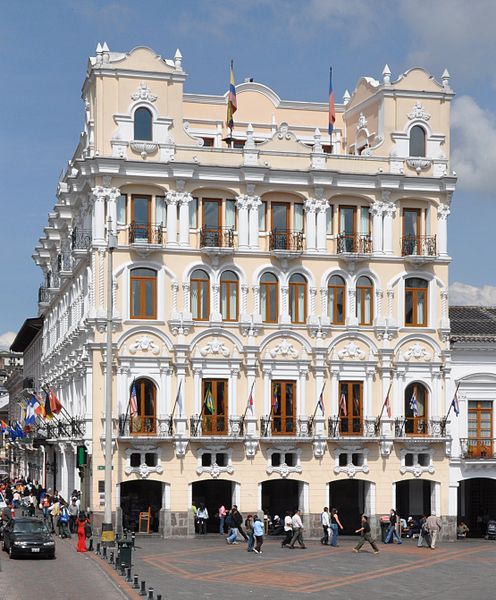
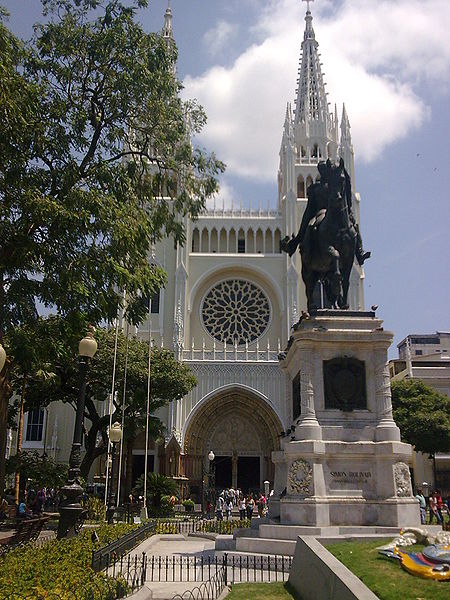
REGISTRATION/EMBASSY LOCATION: U.S. citizens living in or visiting Ecuador are encouraged to register at the Consular Section of either the U.S. Embassy in Quito or the U.S. Consulate General in Guayaquil and obtain updated information on travel and security in Ecuador. The Consular Section in Quito is open for citizen services, including registration, from 8:00 a.m. to 12:30 p.m. and 1:30 to 4:00 p.m., Tuesday through Friday, excluding U.S. and Ecuadorian holidays. The Consular Section in Guayaquil is open for those services from 8:00 a.m. to 12:00 noon, Tuesday through Friday, excluding U.S. and Ecuadorian holidays. The U.S. Embassy in Quito is located at the corner of Avenida 12 de Octubre and Avenida Patria (across from the Casa de la Cultura); telephone (011-593-2) 562-890, extension 480, during business hours (8:00 a.m. to 5:00 p.m.) or 561-749 for after-hours emergencies; fax (011-593-2) 561-524; Internet web site - http://www.usis.org.ec. The Consulate General in Guayaquil is located at the corner of 9 de Octubre and Garcia Moreno (near the Hotel Oro Verde); telephone (011-593-4) 323-570 during business hours (8:00 a.m. to 5:00 p.m.) or 321-152 for after-hours emergencies; fax (011-593-4) 320-904. Consular services for U.S. citizens in the Galapagos Islands are provided by the Consulate General in Guayaquil. |