Sitemap

Ancient City of Polonnaruwa Luxury Vacation Guide, Ancient City of Polonnaruwa Virtuoso Luxury Vacations, Cruises, Tours & Hotels Advisors. Call 1-800-330-8820 to book now. Open every day!

Indian Ocean Islands

Sri Lanka Vacation

Anuradhapura

Colombo

Galle

Kandy

Nuwara Eliya

Polonnaruwa

Advertise on this Site

Newsletter Sign Up
Bookmark this page
Email this page to a friend

Ancient City of Polonnaruwa

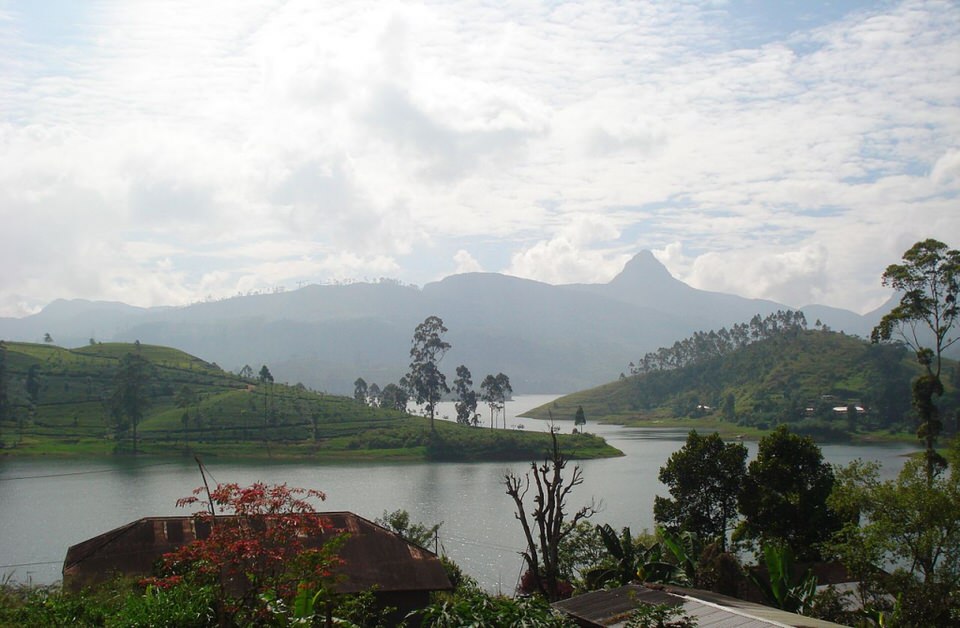
Polonnaruwa, is situated in north-central Sri Lanka (Ceylon), near the Mahaweli River. It is an ancient Ceylonese capital that was long deserted but has been revived in modern times. The city, beautifully situated on a lake, was once the most splendid city of Sri Lanka.

The proximity of Polonnaruwa to the Mahaweli river and to the east coast had resulted in the development of settlements in the region throughout centuries. The region was agriculturally developed at least as early as the 4 th century A.D. Long before that Polonnaruwa was an important military post due to its strategic location and therefore it was known as the Kandavurunuvara.
Luxury Hotels and Resorts in Polonnaruwa, Sri Lanka.


Polonnaruwa (Polonnaruva) became the residence of Ceylon's kings in 368 A.D. From the 6 th century A. D. onwards Polonnaruwa became increasingly important. Anuradhapura was superseded by Polonnaruwa as the principal centre of dynastic power in the eleventh century. The South Indian Chola empire which conquered the northern part of Sri Lanka in 1017 A.D. established its capital at Polonnaruwa and held sway over the Dry Zone regions for 53 years until 1070 A.D. It was hoped that this new residence in such a difficult accessible area would be better protected from the notorious raids from the Indian Sub-Continent. After the Cholas were expelled the Sinhala kings too selected Polonnaruwa as their capital and it flourished for nearly two centuries until 1215 A.D. During the reigns of the kings Parakrama Bahu the Great (1153-1186) and his successor Nissanka Malla 1187-1196 the Singhalese kingdom reached its last golden age, of which the splendour of its buildings and palaces the impressive irrigation system with artificial lakes, tanks and channels give clear evidence.They embellished the capital with temples, stupas, and huge stone images of Buddha; among these is a famous colossal statue of the recumbent Buddha. The foreign invader Magha conquered Polonnaruwa in 1215 and with his atrocious rule the Sinhala nobility drifted to the South west.
The modern town arose in the 20 th century after the restoration nearby of an ancient irrigation reservoir to serve the needs of the surrounding agricultural region, in which rice and tobacco are grown.

Intersting Places to visit

Galviharaya
Images of Gal Viharaya are the most impressive sculptures found at Polonnaruwa built in 12th century A.D. by King Parakramabahu the 1st. The great Buddha images of different postures are carved in one granite rock.
The first is a samadhi image in meditation posture while the second is inside a cave and the third standing buddha image with crossed arms and the fourth is a recumbent Buddha image depicting the passing away.
The third standing Buddha image is highly appreciated as it indicates Buddha's great mercy and sorrows also see the ability of the artist who made the black patch going over the nose and avoided going over the eyes.


Lotus Pond (Nelum Pokuna)
A little north of Polonnaruwa Gal Vihare complex, is the late 12th century Lotus Pond. This unique stone bath is built to represent an eight petaled lotus with four tiers. It is believed to be a part of the Jetavana Monastary complex, which consisted of some five hundred buildings at its peak.

 Lankathilaka
The large Gedige Lankathilaka (ornament of Lanka), the image house with a Buddha statue, had 5 stores. It has walls which are 4m trick and still stand 17m high, although the roof has crumbled. The design illustrates the development in thinking which underlay the massive building, for it marks a turning away from the abstract from of the dagaba to a much more personalized faith in the Buddha in human form.
The building is essentially a shrine, built to focus the attention of worshippers on the 18m high statue of the Buddha at the end of the nave. Though built of brick and covered in stucco, the overall design of the buildings shows strong Tamil influence. The exterior bas relief sculpture, most of which is in very impressive, shed light on contemporary architectural style. 

Parakrama Samudraya
The huge lake upon whose northeastern shore Polonnaruwa rests is an inland sea known as the Parakrama Samudra. The largest irrigation tank of Parakramabahu I . It was the life-blood of the ancient city in the same way that it is the blood life of the religion today, providing water for the growth of thirsty rice crops and other foodstuffs. Its 5,600 acres of  water irrigated an estimated 18,200 acres of paddy land. 
Five minor lakes were incorporated in the building of the Parakrama Samudra, whose 8 1/2- mile bund contains 4 1/2 million cubic yards of earth. One thousand men employed in the hand labor of the period, working 24 hours a day. could scarcely have completed the job in 12 years.


Vatadage
The Vatadage (hale of the relic) near the entrance is a circular building with a dageba on concentric terraces with sculptured railings, the largest with a diameter of 18m. A superbly planned and executed 12th century masterpiece attributed to Naissankamalla (187-1196), the Vatadage has modest proportions but remarkably graceful lines. It was almost certainly intended to house the Tooth Relic. There are impressive guard stones at the entrance of the second terrace and wing stones with makaras enclosing lion figures; the moonstone to the north entrance of the top terrace is superb. The dagaba at the center has four Buddha's (some damaged) with later stone screen.


Royal Citadel
The Citadel housed the palace and the administrative buildings of King Prakramabahu, the Great (12th century AD) and is enclosed by a huge rampart more than a metre thick. According to historical records the King's Palace had been seven stories high with a thousand chambers. The remains of three stories and a few of the chambers can be seen. The Council Chamber where the King met his ministers is situated a few metres away in front of the palace. It is an impressive building with fine stone carvings. The Royal Bath is outside the rampart with a flight of steps leading to it. The beautiful bath is made of stone with a small pavilion probably used as a changing room.

Kiri Vehara
  Kiri Vehera - the best preserved of all Sri Lanka's un-restored dagabas built in the 12th Century by Queen Subhadda one of the wives of King Parakramabahu, where the original plaster is still intact.
Alahana Pirivena
A Monastic university complex extending over more than eighty hectares erected by King Parakramabahu I in the 12th Century.

Galpotha  (The Stone-book)
A huge stone inscription of King Nissankamalla (12th Century) on a granite block measuring 8 metres in length and 4.3 metres in width recording among other things the King's invasion of India.

Hatadage
 A relic chamber built by King Parakramabahu I to house the sacred Tooth Relic.

Lankatillake
 A large Buddha image house with a collosal Buddha image built by King Parakramabahu.

Nissanka Latha Mandapa
 A stone structure with pillars built in the shape of floral stems constructed by King Nissankamalla (12th century) to listen to the chanting of Pirith (recital of Buddhist scriptures) by the monks .

Ronkoth Vehara
 A fairly well preserved large dagoba built by King Parakramabahu emulating the Ruwanvelisaya of Anuradhapura.

Demala Maha Seya  (The Great Tamil Dagoba)
A Dagoba that King Parakramabahu wanted to build in Polonnaruwa using South Indian prisoners of war to surpass the mighty Ruwanvelisaya of Anuradhapura but was never completed.

Tivanka Image House
Largest among the brick - built shrines of Polonnaruwa. In the narrow antechamber, beautiful Devas (demi-gods), and the Bodhisattvas above, beckon the worshipper into the inner sanctum. Here stands the mighty Tivanka image of the Buddha, depicted in the 'thrice curved pose'.

The Satmahal Prasada
A square pyramidal tower in seven tiers - a Dagaba of novel design. Each side of each tier is ornamented by a figure of a deity in an arched niche. The simple, stepped design is a very ancient form of architecture which occurs in the step pyramids of Egypt, and the ziggurats of Mesopotamia. Another building of this type occurs in Thailand in the monastery of Vat Kukut at Lamphun, and both are probably derived from an earlier Indian prototype.

Hindu Shirines
Remains of Hindu Shrines dedicated to God Shiva built during the Chola occupation of Polonnaruwa in the 10th century.

Ancient City of Polonnaruwa Vacations and Cruises

Book or Plan your Ancient City of Polonnaruwa Vacation or Cruise Here


Search Your Vacation, Tour or Cruise


About Us

About Us

Indian Ocean Vacation Feedback & Testimonials

Exclusive Vacation Specials

Luxury Tours, Vacation & Cruise Specials
Indian Ocean Islands
Vacation Accommodations


Indian Ocean Islands Luxury Hotels & Resorts

Indian Ocean Islands Luxury Vacations

Indian Ocean Islands Luxury Tour & Vacation Packages

Indian Ocean Vacation Videos

Vacations, Cruises & Tour Videos

Travel & Vacation Store

Travel Books

Travel Accessories

Travel Clothes


Helpful Travel Links

Travelex Luxury Travel Insurance


CSA Luxury Travel Insurance

Travel Guard Insurance

Passports & Visas

Other Helpful Links


Travel Agent Jobs

Travel Agent Jobs & Career Opportunities  
Full Service Ancient City of Polonnaruwa Vacation Planner
Click here to start planning a great Indian Ocean vacation, tour or cruise with our Virtuoso Travel Advisors. You may call us too, but we'd really appreciate it if you complete a vacation planner first so we can determine which destination specialist to introduce you to. Thank you very much! Call 1 800 330 8820 or 415 446 5252 to book your Ancient City of Polonnaruwa vacations.

Worldwide Destinations, Tours and Vacation Guides

Africa

Asia

Australia

Canada

Caribbean

Central America

China

Europe

Fiji

Hawaii

Indian Ocean

India

Mexico Middle East New Zealand Russia
South America South Pacific Tahiti Islands United States

Luxury Cruises, Cruise Lines, Small Ship and River Cruises

Luxury Cruises

Cruise Destinations

River Cruises

Small Ship Cruises


Corporate Incentive Vacations, Tours, Cruises and Business Meetings

Corporate Groups

Incentive Travel

Business Meetings


5000 Specialty, Adventure, Experiential, Honeymoon and Family Vacations

Luxury Tours

Honeymoons

Family Vacations

Train Vacations

Specialty Vacations Private Jet Vacations Yachting Vacations Wine Tour Vacations

Travelwizard Information

About Us

Advertising Info

Contact Us

Home


asta_logo_140 2006clialogo
We accept credit cards: masterc visa amex

During this time of price volatility in the Ancient City of Polonnaruwa vacations, travel, tour and cruise industry, please be advised the pricing can fluctuate within the same day. All of our promotions are subject to change without notice. As a result, prices will not be guaranteed until booked.

Disclaimer: We've worked hard to make all the Ancient City of Polonnaruwa vacations, cruise and travel packages information on this web site as accurate as possible, but it is provided 'as is' and we accept no responsibility for any loss, injury or inconvenience sustained by anyone resulting from this information.

Travel Agent Career Opportunities

State of California seller of travel License No: 2061139-40
We are on the Better Business Bureau Honor Roll.

© 1998 TravelWizard.Com, Ancient City of Polonnaruwa Vacations, Cruises and Custom Travel Packages Dept. All rights reserved.