|
The República Oriental del U ruguay is situated on South America's Southern Cone, its eastern shore lies next to the Atlantic Ocean between the 30th and 35th southern latitude parallels and between the 53rd and 58th western longitude meridians. It is the warmest zone within the southern region. Uruguay borders Brazil on the north and northeast; Argentina on the west and south, the River Plate to the south and the Atlantic Ocean to the east.
Surface:
a) Land: 176,215 Km2. b) Jurisdictional waters and territorial sea: 142,093 Km2.
Altitude:
a) average: 117 meters. b) highest peak: 514 meters.
Climate: Mild and mostly uniform in the whole country with distinct seasons. The absence of mountains exposes the region to a wide spectrum of cold and humid southeasterly winds. As its name indicates the wind comes from the southeast, and the southerner or "pamperos" which blows from the Patagonia Andes.
Hydrography: A number of rivers run through the country, most of them tributaries of the river Uruguay, natural border with Argentina. The river Uruguay is 1600 kilometers in length, it starts in Brazil and is navigable even by vessels with deep drafts. Among its most important tributaries are the rivers Cuareim, Arapey, Daymán, Queguay and the River Negro 600 kilometers in length which also begins in Brazil and divides the country in half.
Society: Uruguay is a cosmopolitan society as a result of many successive European migrations. As such it is an open society, promoting tolerance, non discrimination towards foreigners be them of different race, religion or political ideologies.
Population:
a) Total: 3,151,600 b) Urban: 89% c) Rural : 11% d) Montevideo (capital city) concentrates 1,330,440 inhabitants. e) Active economically: 1,474,900 (58.1%). f) Density (inhabitant per Km2) : 18 g) Annual demographic growth rate: 6.8 per 1000 inhabitants.
Education: Educational freedom is constitutionally guaranteed. Public education is secular, free and obligatory. Primary, secondary, agrarian or industrial education is obligatory. Primary, Secondary, Advanced (University of the Republic), industrial and artistic and physical official education is free.
Literacy rate: 97%. Uruguay has the highest literacy rate in all of Latin America and one of the highest in the world; the highest rate of secondary schooling - 50% higher than the continent?s average, and the highest indicators related to culture and communication: newspaper circulation, televisions and telephone lines per 1000 inhabitants (285).
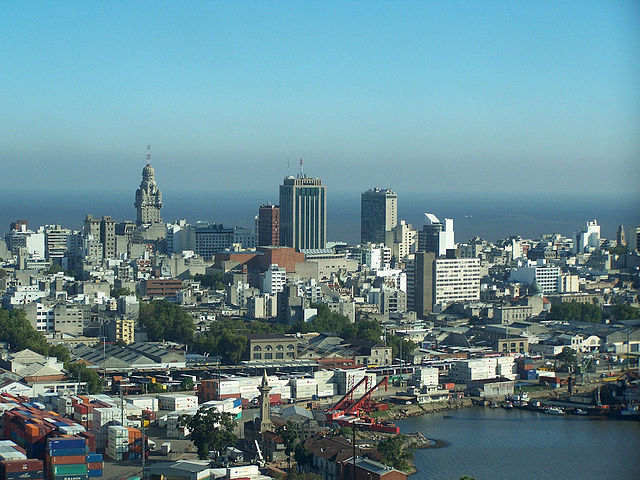
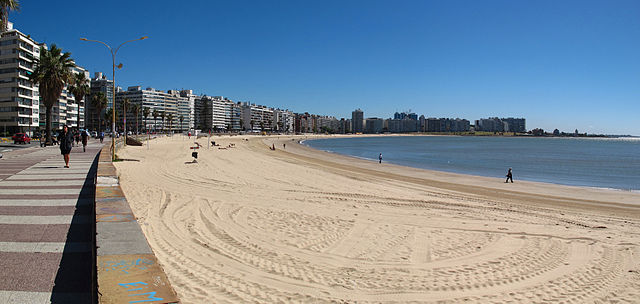
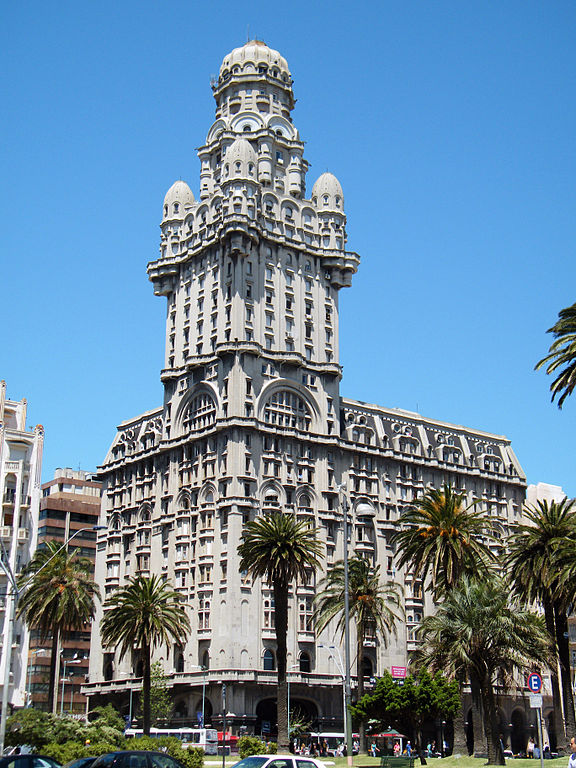
Geographic Division: Uruguay is divided into 19 Departments, Montevideo being its capital and having a land surface of about 530 Km2. Montevideo is a modern and safe metropolis erected next to the Rio de la Plata bay. It has an exceptional natural port which operates freely opposite the Atlantic coast.
System of Government: Since its first political Constitution in 1830, Uruguay as a Nation has adopted a Democratic-Republic system. Its sovereignty is directly exercised by the Electorate and indirectly by the representative Powers established by the Constitution, in other words, the Executive, Legislative and Judiciary, all of which are independent from each other and act according to the norms established by the Magna Carta.
Uruguay is a middle-income nation with a developing economy. The quality of facilities for tourism varies, according to price and area. The capital city is Montevideo.
ENTRY REQUIREMENTS: A passport is required. U.S. citizens do not need a visa for a visit of less than three months. For current information concerning entry and customs requirements for Uruguay, travelers may contact the Embassy of Uruguay at 2715 M St., N.W., third floor, Washington, D.C. 20007, tel. (202) 331-1313. Internet: http://www.embassy.org/uruguay/. Travelers may also contact the Consulate of Uruguay or the Honorary Consul in Los Angeles, San Francisco, Boston, Miami, Chicago, New Orleans, Chicago, New York, Seattle, Honolulu, or San Juan, Puerto Rico.
HUNTING PERMITS: The Uruguayan Ministry of Livestock, Agriculture and Fisheries strictly enforces all regulations regarding hunting permits, as well as seasonal and numerical limits on game. Visitors who contravene local law have been detained by the authorities and had valuable personal property (weapons) seized. Under Uruguayan law, seized weapons can only be returned after payment of a sum equivalent to the value of the property seized. Hunters are also subject to stiff fines for practicing the sport without all appropriate permits.
REGISTRATION/EMBASSY LOCATION: Americans living in or visiting Uruguay are encouraged to register at the Consular Section of the U.S. Embassy in Montevideo and obtain updated information on travel and security within Uruguay. The U.S. Embassy is located at Lauro Muller 1776, tel. (598)(2) 203-6061 or (598)(2) 408-7777; fax (598) (2) 408-4110. For security reasons, U.S. citizens are now encouraged to register by fax, but should call the American Citizen Services Unit at the U.S. Embassy (extension 288) first to inquire about the registration process. Further information is also available on our Embassy's Internet site at: http://www.embeeuu.gub.uy/. |