Sitemap

Fiji Culture  Luxury Vacation Guide, Fiji Culture  Virtuoso Luxury Vacations, Cruises, Tours & Hotels Advisors. Call 1-800-330-8820 to book now. Open every day!

Fiji Vacations

Advertise on this Site

Newsletter Sign Up
Bookmark this page
Email this page to a friend
Fiji Islands Culture

Fiji cultural tours and excursionsFiji cultural tours and excursions.

Why Fiji?
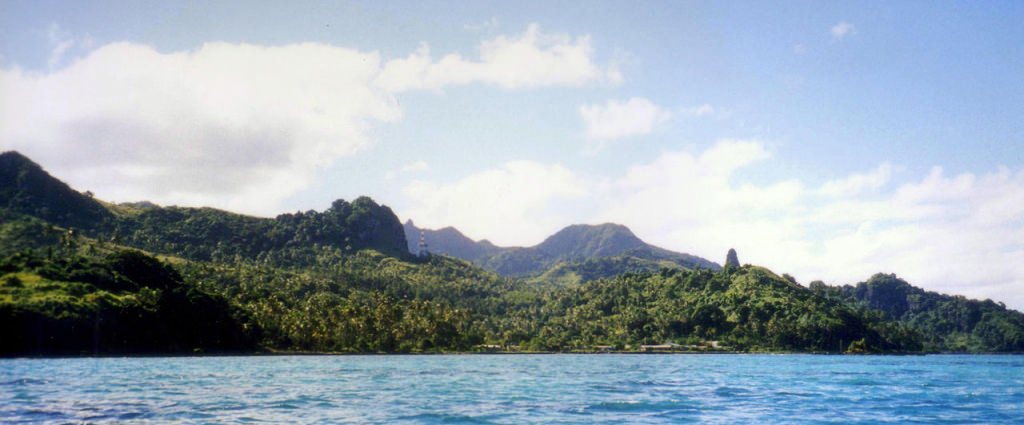
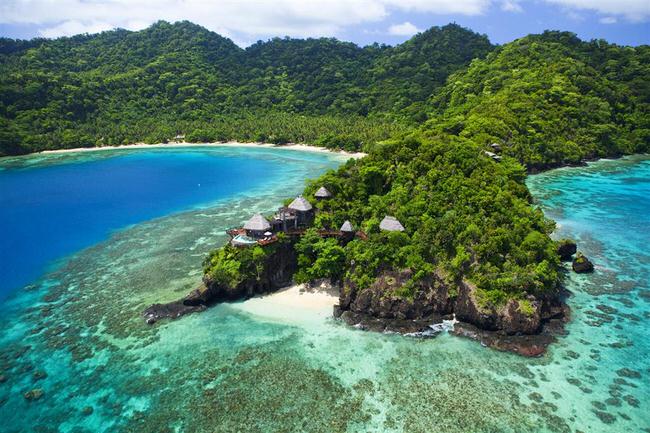
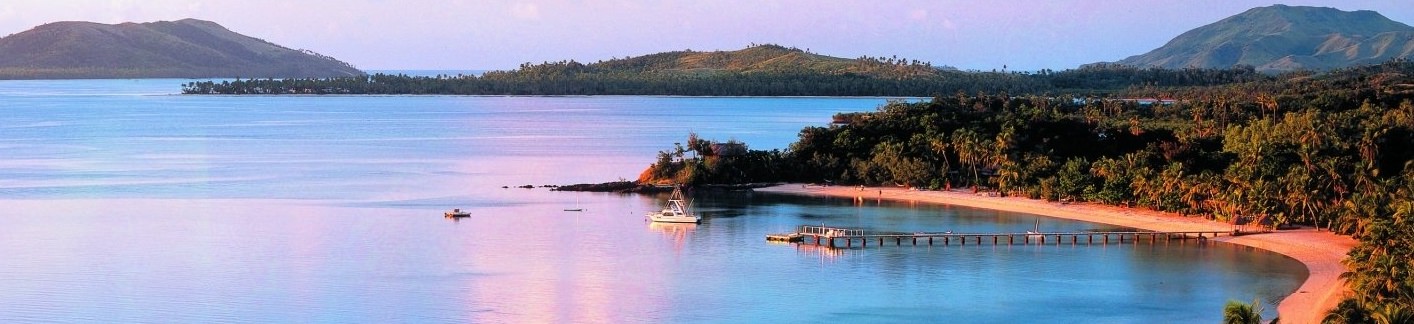
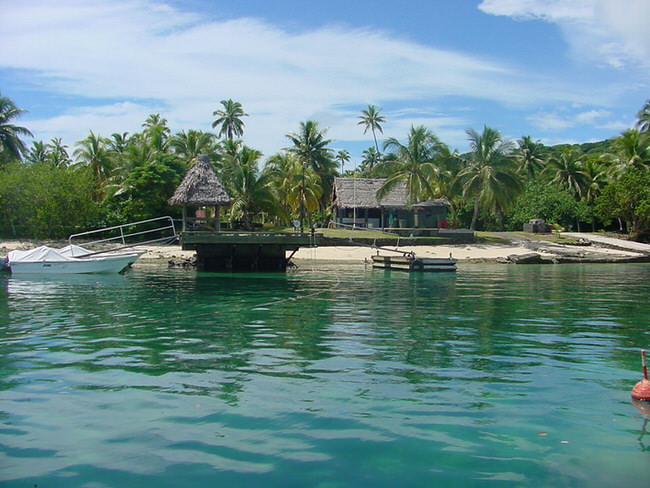
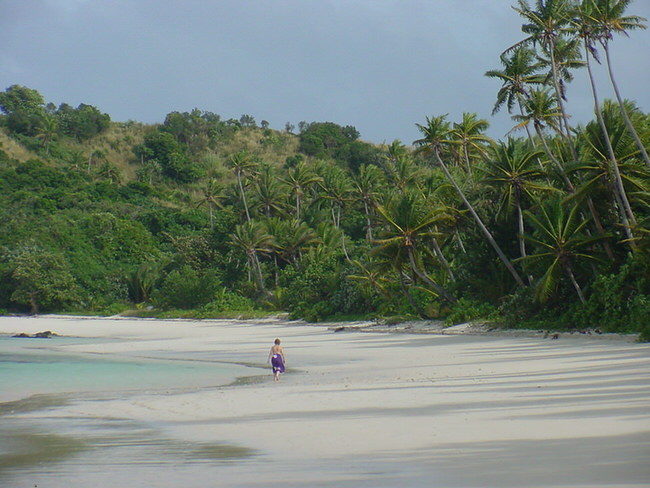
We traveled halfway around the world to escape the monotony of everyday life and to see how the other half lives. Turns out they're a lot like us, they just have their priorities in a different place. A beautiful place where the weather never turns cold and neither do the hearts of the people, whose positive outlook on life is reflected in their smiles as they welcome you to the islands they take such great pride in calling home. From the minute you step off the boat and into the warm south Pacific surf, you instantly feel just like one of them, a local. They celebrate your differences and surpass all your expectations. You never want for anything and for some reason, the little things they do always seem to overshadow the big ones. Unsurpassed hospitality is rivaled only by white sandy beaches that never end, clear blue water like tears of joy, rainbow reefs you'll swear you once saw in a dream, and rich green palm trees that reach for the sky. And as if that?s not enough, as the sun fades into the ocean, it paints another perfect sunset that soon gives way to millions of brilliant stars. Stars you've never seen before that fill the night and mark the end of another perfect day in Fiji, a true paradise on Earth.

Why did we go to Fiji? It wasn't because we didn't have to wear shoes for a week, it was because we didn't even remember to put them on.
- Cory Davies

Fiji was first settled about three and a half thousand years ago. The original inhabitants are now called "Lapita people" after a distinctive type of fine pottery they produced, remnants of which have been found in practically all the islands of the Pacific, east of New Guinea, though not in eastern Polynesia. Linguistic evidence suggests that they came from northern or central Vanuatu, or possibly the eastern Solomons.
Before long they had moved further on, colonising Rotuma to the north, and Tonga and Samoa to the east. From there, vast distances were crossed to complete the settlement of the Pacific to Hawaii in the north, Rapanui (Easter Island) in the east and Aotearoa (New Zealand) in the south.
Unlike the islands of Polynesia which showed a continuous steadily evolving culture from initial occupation, Fiji appears to have undergone at least two periods of rapid culture change in prehistorical times.
This may have been due to the arrival of fresh waves of immigrants, presumably from the west. Prehistorians have noted that a massive 12th century volcanic eruption in southern Vanuatu coincides with the disappearance there of a certain pottery style, and its sudden emergence in Fiji.
It is hardly surprising then, that the Fijian culture is an intricate network and that generalisations are fraught with danger. Although the legendary king of Bau, Naulivou, and his successors had control over a large area of eastern Fiji, at no time before colonialisation was Fiji a political unity. Nevertheless, Fiji does exhibit certain traits that sets it apart from its neighbours, and it is this that defines a distinctive Fijian culture.

Bose Levu Vakaturaga (Great Council of Chiefs)

The Bose Levu Vakaturaga (BLV) is the highest assembly of the traditional chiefs of Fiji, with a small number of specially qualified commoners, who meet at least once a year to discuss matters of concern to the Fijian people. In earlier days this Council had the power to pass laws and regulations binding Fijians but this was removed towards the end of the colonial era when separate Fijian regulations were abolished. Despite this, the Council's advice is always sought on matters affecting the Fijian people, and it continues to be held in high esteem by all communities in Fiji.The BLV appoints the President of the Republic of Fiji Islands. Currently, the BLV consists of 55 members. Three each are nominated from the 14 provinces, 3 from the island of Rotuma and 6 nominated by the Minister for Fijian Affairs in consultation with the President of Fiji. The current Prime Minister, President and Vice-President are also automatic members while former Prime Minister, Sitiveni Rabuka is a life-member of the Council.

Fijian Administration

Fiji is divided into 14 provinces, which are themselves composed of smaller administrative units, the basic one of which is the village (koro). At the head of a village is the turaga-ni-koro, elected or appointed by the villagers. Several koro form a district (tikina) and several tikina make up a province or yasana. Each province is governed by a council with an executive head (Roko Tui) whose appointment has to be approved by the Fijian Affairs Board, which must also approve all rates and by-laws applied, by the provincial council. The Fijian Affairs Board is regarded as the guardian of the Fijian administrative system and many other aspects of Fijian custom.

Meke (Dance)

Visitors are often welcomed at resorts and hotels with a ‘meke’, a dance performance that enacts local stories and legends. While performances for tourists may seem staged, the meke is an ongoing tradition. The arrangement of the group and every subtle movement has significance. Important guests and onlookers are honoured with the best seating positions.
In the past, Fijian meke were accompanied by chanting by a chorus or by ‘spiritually possessed seers’, and usually rhythmic clapping, the thumping and stamping of bamboo clacking sticks, the beating of slit drums and dancing. They were held purely for entertainment, for welcoming visitors, or on important religious and social occasions; births, deaths, marriages, and property exchanges between villages.
Men, women and children participated in meke. Men performed club and spear dances and the women performed fan dances.

Yaqona Drinking (Kava)

Yaqona, otherwise known as kava, is an infusion prepared from the root of Piper methysticum, a type of pepper plant. It is extremeny important in Fijian culture - in the time of the 'old religion' it was used ceremonially by chiefs and priests only. Today, yaqona is part of daily life, not only in villages but across the different races and in urban areas. 'Having a grog' is used for welcoming and bonding with visitors, for storytelling sessions or merely for passing time.
There are certain protocols to be followed at a kava ceremony and in some remote villages, it is still a semireligious experience. Sit cross-legged, facing the chief and the tanoa, or large wooden bowl. Women usually sit behind the men and won't get offered the first drink unless they are the guest of honour. Never walk across the circle of participants, turn your back to the tanoa or step over the cord that leads from the tanoa to a white cowry (it represents a link with the spirits).
The drink is prepared in the tanoa. The dried and powdered root, wrapped in a piece of cloth, is mixed with water and the resulting concoction looks (and tastes) like muddy water. You will then be offered a drink from a bilo (half a coconut shell). Clap once, accept the bilo and say 'bula' (meaning 'cheers', or literally, 'life'), before drinking it all in one go. Clap three times in gratification and try not to grimace. The drink will be shared until the tanoa is empty. You are not obligated to drink every bilo offered to you, but it is polite to drink at least the first.

Bark Cloth and Traditional Textiles

Masi, also known as tapa, is bark cloth with black and rust-coloured printed designs. Masi played an important role in Fijian culture and its motifs had symbolic meaning and to a certain extent still do. It is used for special occasions - in 1996 the Tui Cakau wore masi ceremonial attire at his installation as paramount chief of the Cakaudrove region. Fijian masi is now mostly made for tourists and is used for postcards, wall hangings and other decorative items. Textile designers are now incorporating traditional masi motifs in their fabrics.

Mat and Basket Weaving

Most Fijian homes use woven pandanus-leaf mats for floor coverings, dining mats and as finer sleeping mats. They are much in demand as wedding presents and for baptisms, funerals and presentations to chiefs. Most village girls learn the craft, traditionally it was the hereditary role of the women of certain tribes. The pandanus leaves are cut and laid outdoors to cure, then stripped of the spiny edges and boiled and dried. The traditional method for blackening the leaves for contrasting patterns is to bury them in mud for days and then boil them with special leaves. The dried pandanus leaves, made flexible by scraping with shells, are split into strips of about 1 to 2cm.


Population: 832,494 (July 2000 est.)

Age structure:
0-14 years: 33% (male 141,779; female 136,212)
15-64 years: 63% (male 263,127; female 262,686)
65 years and over: 4% (male 13,405; female 15,285) (2000 est.)

Population growth rate: 1.41% (2000 est.)

Birth rate: 23.48 births/1,000 population (2000 est.)

Death rate: 5.78 deaths/1,000 population (2000 est.)

Net migration rate: -3.6 migrant(s)/1,000 population (2000 est.)

Sex ratio:
at birth: 1.05 male(s)/female
under 15 years: 1.04 male(s)/female
15-64 years: 1 male(s)/female
65 years and over: 0.88 male(s)/female
total population: 1.01 male(s)/female (2000 est.)

Infant mortality rate: 14.45 deaths/1,000 live births (2000 est.)

Life expectancy at birth:
total population: 67.94 years
male: 65.54 years
female: 70.45 years (2000 est.)

Total fertility rate: 2.89 children born/woman (2000 est.)

Nationality:
noun: Fijian(s)
adjective: Fijian

Ethnic groups: Fijian 51% (predominantly Melanesian with a Polynesian admixture), Indian 44%, European, other Pacific Islanders, overseas Chinese, and other 5% (1998 est.)

Religions: Christian 52% (Methodist 37%, Roman Catholic 9%), Hindu 38%, Muslim 8%, other 2%
note: Fijians are mainly Christian, Indians are Hindu, and there is a Muslim minority (1986)

Languages: English (official), Fijian, Hindustani

Literacy:
definition: age 15 and over can read and write
total population: 91.6%
male: 93.8%
female: 89.3% (1995 est.)

Expert Fiji Culture Vacation Planners

Book or Plan your Fiji Culture Vacation or Tour Here


Search here for your Fiji Vacation or Hotel


Win A Windstar Cruise!
About Us

About Us

About Us Video

Fiji Vacation Feedback & Testimonials
Fiji Vacations & Tour Packages

Fiji Honeymoon Vacations
Fiji Luxury Vacation Packages

Fiji Travel Videos

1000's of Vacations, Cruises & Tour Videos

Exclusive Fiji Vacation Specials

Blog Specials


Travel & Vacation Store

Travel Books

Travel Accessories

Travel Clothes

Helpful Travel Links


Travelex Luxury Travel Insurance

CSA Luxury Travel Insurance

Travel Guard Insurance

Passports & Visas

International Phone Service

VIP Service in Las Vegas

Other Helpful Vacation Links


Travel Agent Jobs

Travel Agent Jobs & Career Opportunities

Full Service Fiji Culture Vacations Planner
Click here to start planning a great Fiji vacation, tour or cruise with our Virtuoso Travel Advisors. You may call us too, but we'd really appreciate it if you complete a vacation planner first so we can determine which destination specialist to introduce you to..Thank you very much! Phone 1 800 330 8820 or 415 446 5252 to book your Fiji vacations.

Worldwide Destinations, Tours and Vacation Guides

Africa

Asia

Australia

Canada

Caribbean

Central America

China

Europe

Fiji

Hawaii

Indian Ocean

India

Mexico Middle East New Zealand Russia
South America South Pacific Tahiti Islands United States

Luxury Cruises, Cruise Lines, Small Ship and River Cruises

Luxury Cruises

Cruise Destinations

River Cruises

Small Ship Cruises


Corporate Incentive Vacations, Tours, Cruises and Business Meetings

Corporate Groups

Incentive Travel

Business Meetings


5000 Specialty, Adventure, Experiential, Honeymoon and Family Vacations

Luxury Tours

Honeymoons

Family Vacations

Train Vacations

Specialty Vacations Private Jet Vacations Sporting Events Wine Tour Vacations

Travelwizard Information

About Us

Advertising Info

Contact Us

Home


asta_logo_140 2006clialogo
We accept credit cards: masterc visa amex

During this time of price volatility in the Fiji Culture vacations, travel, tour and cruise industry, please be advised the pricing can fluctuate within the same day. All of our promotions are subject to change without notice. As a result, prices will not be guaranteed until booked.

Disclaimer: We've worked hard to make all the Fiji vacations, cruise and travel packages information on this web site as accurate as possible, but it is provided 'as is' and we accept no responsibility for any loss, injury or inconvenience sustained by anyone resulting from this information.

Travel Agent Career Opportunities

State of California seller of travel License No: 2061139-40
We are on the Better Business Bureau Honor Roll.

© 1998 TravelWizard.Com, Fiji Culture Vacations, Fiji Cruises and Custom Travel Packages Dept. All rights reserved.